
Choosing the right manufacturing partner for supplements is like picking the right copilot for a cross country flight. It can make or break your journey. The global nutraceuticals industry was valued at about $500.6 billion in 2025. It is projected to double by 2034. Indian market may reach $60 billion by 2030. Assuring quality, safety and trust are crucial for such explosive growth and consumer demand. Continuing brand success depends on a partner who shares your values and meets strict standards. This blog will guide you through the process of selecting nutraceutical partner. The highlight is on key criteria to ensure safety and compliance of your supplements.
The Foundation: Quality, Compliance and Certifications
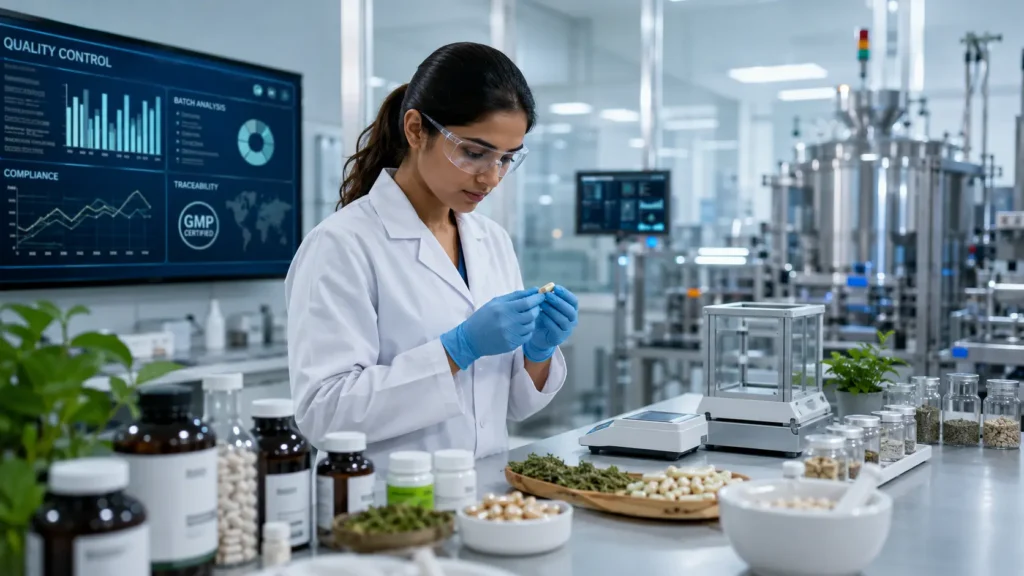
Quality control and regulatory compliance are nonnegotiable. A top tier nutraceutical partner will have GMP certified facilities, ISO accreditation and adherence to FSSAI (or FDA) guidelines. GMP (Good Manufacturing Practices) is a global standard. in the U.S. it’s codified in FDA’s 21 CFR Part 111 and India’s FSSAI mandates GMP based hygiene and quality checks. This means every raw ingredient is tested and traced. Each production step is documented and skilled staff follow strict procedures. A reliable manufacturer maintains an approved vendor list and performs rigorous incoming ingredient test including identity assays, microbial screens and heavy metal analyses. They provide full ingredient traceability from source to finished product and often share batch certificates and lab test results.
A certified facility not only ensures safety but also instills trust. Implementing GMP significantly enhances product safety, reduces contamination risks and ensures reproducibility. Always ask potential partners for their latest third party audit reports or inspection records. It’s a red flag if a facility cannot produce an FDA inspection or GMP audit on request. Reliable partners will gladly provide documentation of quality assurance processes and COAs (Certificates of Analysis). This transparency is critical as trust in a nutraceutical brand starts with trust in its maker.
Transparency and Traceability Builds Trust
A trustworthy manufacturer makes transparency a priority. Is it possible to verify the origin of every ingredient? Modern nutraceutical companies increasingly use digital tracking platforms and blockchain based solutions to ensure complete end to end ingredient traceability. They will openly share documentation like supplier audits, Certificates of Analysis and testing reports for raw materials and finished products. Look for partners that support quality management systems (like ISO 9001, ISO 22000, or HACCP) to guarantee consistency.
Clear communication channels are also key. Your partner should be willing to answer questions about processes in detail. Ask how they prevent cross contamination or if they conduct third party lab testing on finished products. Slow or vague responses can signal trouble. Good partners provide detailed QA reports and they invite audits or virtual tours of the facility. Such transparency strengthens customer confidence.
Key Evaluation Checklist
- Certifications & Compliance: Check whether the manufacturer holds valid GMP certification, FSSAI (or FDA) registration and ISO food safety certifications. These are the bare minimum proof of safe practices.
- Quality Control: Ask if the manufacturer tests all raw materials and final products. In house QA teams or regular third party lab tests show true commitment.
- Traceability: Insist on end to end tracking. Can every batch be traced from field to bottle? Transparency in sourcing prevents subpar ingredients.
- Formulation & R&D Support: Assess the manufacturer’s scientific capabilities. A reliable partner should have an in-house research team that can develop custom formulations and innovative delivery systems.
- Scale & Flexibility: Assess the manufacturer’s ability to scale production and review its minimum order quantity (MOQ) requirements. Can they handle your launch size and scale up later? Some CDMOs offer low initial runs (1,000–5,000 units) for startups while others require tens of thousands.
- Communication & Service: Good communication is critical. The partner should provide clear timelines and be responsive. A manufacturer that listens and guides you at each stage is invaluable for long term trust.
Innovation and R&D: Beyond Just Production
A strong manufacturing partner contributes more than machines to bring innovation. Do they have research and development staff (nutritionists, food scientists, pharmacists) on hand? Their expertise should help optimize your formula for stability and efficacy. The right partner will discuss dosage forms (capsules, powders, gummies, etc.) and even prototype small batches to ensure the product works as intended.
Look for a partner that asks questions about your target customer and product goals. Sophisticated CDMOs often offer clinical trial support and analytical testing (HPLC, stability studies) to back up your claims. This scientific backing is an advantage. More companies are conducting clinical trials to validate their nutraceutical products to give a competitive edge. Your ideal partner should act as a development partner than a manufacturer. A manufacturer without proven R&D expertise, well-equipped laboratories, documented quality processes and a strong history of innovation may struggle to support your long-term business growth.
Capacity, Cost and Collaboration
Choosing a manufacturer based only on the lowest price can compromise quality and long term success. Extremely low quotes can indicate corners being cut in raw materials or testing. A reliable partner justifies their price with service including sourcing ingredients, handling testing, manufacturing and packaging. They allow you to focus on marketing and sales while they cover the technical side. Compare quotes carefully. The list of services (formulation, scale up, private labeling, fulfillment) can vary between manufacturers.
Make sure that your partner can grow with you. The manufacturer should be able to scale production without sacrificing lead times while your business grow. Ask about equipment and automation. Modern lines with capacity for expansion are a plus. Confirm flexibility by checking whether they hold capacity for your orders. Ask the following. What percentage of your current production capacity is available for new clients and how do you prioritize production scheduling during high demand periods? A good partner will give frank answers about lead times, MOQs and scheduling.
Shared Values and Sustainability
Consumers value more about ethics and sustainability than just product performance. A partner who shares your brand values can enhance your reputation. If you market clean label or vegan supplements, confirm the manufacturer can certify products for those claims (non GMO, allergen free, halal, etc.). Ask about their sourcing practices and certifications (organic, kosher, etc.). Brands with sustainability commitments should also inquire about eco friendly packaging options and waste reduction programs.
Embracing sustainability is a good PR. More consumers are choosing brands that actively prioritize environmental sustainability. Choosing a partner with clean energy usage, minimal waste and ethical labor practices not only helps the planet but also builds trust with conscious customers. Make sure your nutraceutical partner selection reflects your own commitment to ethics and social impact.
Building Trust through Partnership
Trust in your partner is as crucial as trust in your product. Verify their regulatory standing by requesting documentation. Always ask to see copies of their most recent FDA or FSSAI inspection results and any third party audit certificates. Test their transparency with tough questions Notice their responsiveness. A reliable partner will provide detailed answers and guidance than generic marketing jargon.
Before signing any agreement, take time to assess the manufacturer’s strengths in formulation development, GMP compliance, R&D, ingredient quality control, regulatory assistance, specialty certifications, scalable production and end to end packaging and fulfillment. Take the same rigorous approach you’d use for any major business alliance.
The strategic imperative is clear. Assess prospective nutraceutical CDMO partners with the same level of diligence you would use when selecting any critical long-term supplier.
The right manufacturing partner will inspire confidence through consistent quality, reliability and expertise. They will guide you from formulation through launch and support you to focus on vision rather than headaches. You can ensure every supplement you sell is safe and backed by science by checking certifications, demanding transparency and insisting on quality. This nutraceutical partner selection process is the key to long term growth. Your brand thrives when your customers trust your product.
Conclusion: Selecting the right nutraceutical manufacturing partner is a strategic decision with long term impact. Look for certified quality, open processes, technical expertise and shared values. You set a solid foundation for your brand’s future by partnering with a compliant, innovative and reliable manufacturer. Carefully vet each candidate against robust criteria like certifications, testing programs, regulatory know how. Choose the one that aligns with your vision. You can confidently bring high quality, trusted supplements to market and grow your brand for years to come with the right partner by your side.
