
Consumers expect supplement to be safe and effective. Also, they want it to be accurately labeled. People often pay more for clinically proven and high quality supplement products. That means brands must invest in strict supplement quality assurance and thorough quality control. Rigorous standards ensure every dose is potent and safe. Dangerous contaminants or falsified ingredients can slip into the supply without precise standards.
Why Quality Control Matters
Quality issues in supplements are more than just marketing problems. They can be health hazards. Regulators and researchers have found cases of poor quality products. For example, the FDA recently warned that certain “natural” weight loss pills actually contained a poisonous plant (yellow oleander) instead of the advertised herb. Studies have found many illicit supplements remained on the market after warning. Even more troubling is that they still containing banned drugs. These incidents highlight that how lac of quality controls can affect trust and safety of brands. Quality assurance is crucial for supplements to build customer trust. Compromising on quality may boost short term profits but the reputational costs can be high.
Good Manufacturing Practices (GMP) and Regulations
Good Manufacturing Practices (GMP) are central to any quality program. These are legal standards that require clean production and testing. In the U.S., supplement companies must follow FDA’s 21 CFR Part 111 which mandates setting specifications for identity, purity, strength and contaminant limits. World Health Organization calls it GMP. GMP is the aspect of quality assurance that ensures products are consistently produced and controlled to quality standards. It also makes sure processes and product testing meet the intended standards. GMP means using validated equipment, following detailed protocols and keeping full batch records. Many countries require GMP. India’s FSSAI mandates GMP based hygiene and quality controls. A GMP certified facility automatically meets these rules and smooth export and retailer approval. GMP certification or quality seal on a label provides a quick signal to customers that the product follows recognized safety protocols.
Rigorous Testing and Verification
supplements need thorough testing at every stage beyond GMP. Every ingredient and finished batch should be checked for identity, potency, purity and safety. Reputable manufacturers quarantine new raw ingredients and run exhaustive analyses. One leading nutraceutical maker note that “every batch of raw material that enters our facility goes into ‘quarantine.’ We test it for heavy metals like lead and mercury. We also check for microbes like E. coli or mold.” Testing then continues through production. These checks catch any mix ups before packaging. All tests must use scientifically valid methods.
These safety tests are critical. Numerous studies show traditional remedies can carry toxic metals if not carefully controlled. One review found many herbal supplements with lead or arsenic far above safe limits. A reputable brand will only release a batch that passes all these tests and will provide a Certificate of Analysis (COA) as proof. A COA documents the lab results and confirms each ingredient and the final product meets its quality specs.
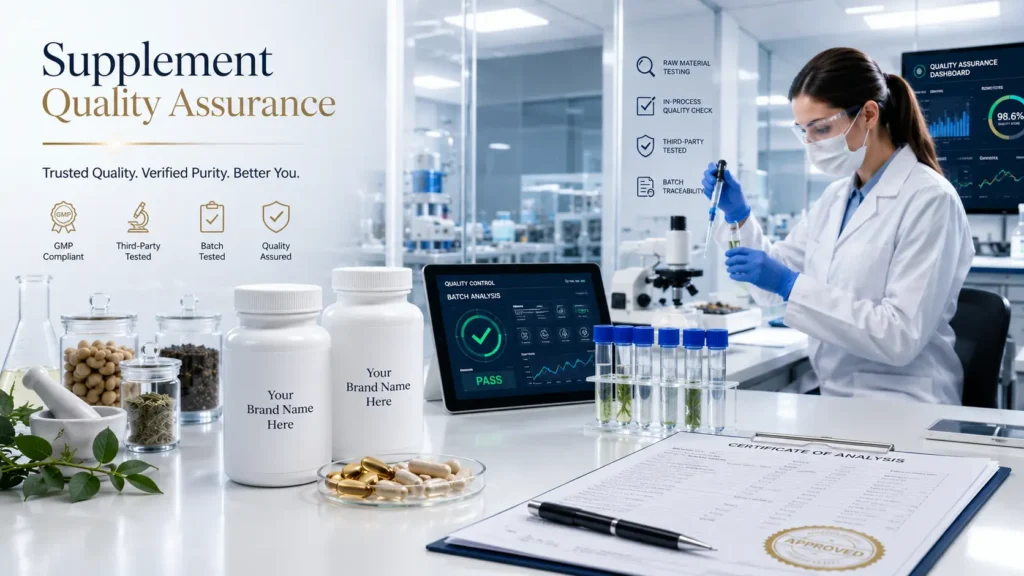
- GMP certified production (FDA cGMP/ISO 22000): Clean facilities, documented processes and trained staff.
- In process checks: Routine weight and hardness tests during manufacturing to catch errors early.
- Laboratory verification: Batch analysis for identity, strength and purity; screening for contaminants (heavy metals, microbes).
- Third party testing: Independent labs (NSF, USP, etc.) audit and retest products to confirm label accuracy.
- Traceability: Complete COAs, batch records and supplier audits for every ingredient, ensuring nothing is hidden.
Third Party Certification
Internal QC is vital, but independent certification adds trust. Organizations like NSF International and USP conduct independent audits of supplements. NSF/ANSI 173 certification reviews product labels and runs toxicology and contaminant tests on items. NSF also retests certified products annually in its accredited labs to ensure they consistently match their label claims. A supplement carrying the NSF or USP Verified seal has been vetted by unbiased experts confirming it contains exactly what the label claims and no unsafe contaminants.
Building Consumer Trust
All these quality steps feed into one goal, the trust. Today’s consumers look for evidence of safety and honesty. Brands that highlight their science and quality processes earn more credibility. Mentioning tests and certifications on labels or websites shows expertise and transparency. Publishing lab reports or audit certificates demonstrates that the brand stands behind its claims. Having qualified scientists or pharmacists involved in formulation and QC adds authority. Brands that demonstrate these qualities stand out. Companies build lasting credibility when they support their claims with data and third party validation.
Conclusion
Demanding rigorous quality control is non-negotiable for any supplement. Companies must enforce GMP compliance, exhaustive testing and transparent documentation to protect customers and their reputation. Every supplement needs defined specs for identity, purity, strength and safety as FDA rules make clear. Meeting these requirements isn’t just a legal duty; it’s good business. Superior supplement quality assurance sets a brand apart in a crowded market after all. Customers can trust that the supplement will deliver on its promise safely when every claim is backed by real data.
