
Omega 3 fatty acids (EPA and DHA) support heart, brain and overall health. Not all omega-3 supplements are produced from the same sources. In this blog we compare fish oil and plant based omega 3 sources. This omega 3 sourcing comparison looks at how each type is made, purified and tested. Understanding these differences helps you pick the right supplement for your needs.
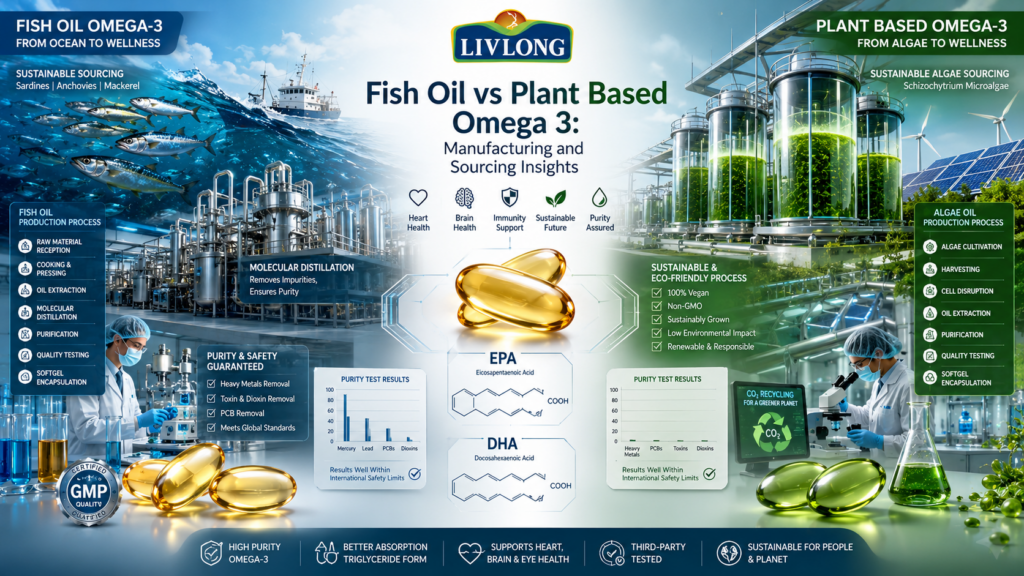
Fish oil is harvested from oily fish like sardines, anchovies and mackerel. Fish accumulate EPA and DHA by eating marine algae in the ocean. The raw oil must be purified before it can be used. Manufacturers like Livlong start with premium sardine oil and use molecular distillation to strip out heavy metals, PCBs and other toxins. The result is a high purity oil rich in EPA and DHA. This oil is then sealed in softgel capsules, protecting the oil from oxidation.
Fish oil supplements come as softgel capsules containing purified omega-3 concentrates. For instance, Liv Long manufactures fish oil capsules with high EPA and DHA content free from heavy metals. Each batch is tested for purity and potency, ensuring consistent omega 3 content. Encapsulation protects the oil from oxidation and strict GMP/ISO standards help verify contaminant levels and safety.
Plant based omega 3 can refer to different sources. Some come from seeds like flax, chia and walnuts, which contain alpha linoleic acid (ALA). The body converts ALA into EPA and DHA, but this conversion is very inefficient (only about 0.5–4%). In contrast, microalgae provide EPA and DHA directly. Algal oil is extracted from single cell algae, the natural source of marine omega-3s, cultivated on land.
Unlike fish oil, algal omega 3 is manufactured entirely within controlled production facilities. Microalgae such as Schizochytrium are grown in tanks or ponds, fed nutrients, CO₂ and light (or plant sugars). After harvesting, the oil is extracted using advanced methods such as ultrasonic, enzymatic, or supercritical CO₂ techniques to preserve its quality. A recent review highlights that algae derived oils have very consistent EPA/DHA content, no fishy odor and no ocean pollutants. This controlled cultivation avoids the heavy metals and PCBs that accumulate in wild fish.
Manufacturing and Purification Processes
Fish Oil: After fish are caught, their flesh is cooked and pressed to separate the oil. The key purification step is molecular distillation, which removes impurities. As Livlong explains, “The oil undergoes advanced molecular distillation to remove heavy metals, toxins and environmental contaminants, meeting global safety standards”. This yields a molecularly distilled fish oil that is safe and highly concentrated in EPA and DHA. The clean oil is then encapsulated or bottled for use.
Algal Oil: Microalgae cultivation also involves key processing steps. After growth, the algal cells are broken open (via drying, milling, or enzymes) to release the oil. The oil is extracted using solvents or CO₂. Modern techniques, such as enzymatic extraction or hydrothermal liquefaction, improve yield while reducing energy use. Because algae are grown in clean tanks, the crude oil is already free of mercury and most ocean pollutants. The final algal oil is then refined and concentrated for supplement use.
Sustainability and Quality Comparison
Sustainability and purity are important in the omega 3 sourcing comparison. Fish oil depends on marine fisheries. Overfishing and ocean health are real concerns: a recent review notes the sustainability of fish derived omega 3 is in question “due to overfishing, inconsistent omega 3 contents and potential contamination in the ocean”. Wild fisheries must be managed carefully. On the positive side, fish oil production has a well-established supply and is generally less expensive.
Algal omega 3 is often seen as more sustainable. Algae can be grown year round without harming wild fish stocks. OmegaQuant notes algal oil can be produced in controlled, ecofriendly facilities that capture CO₂ and use renewable inputs. Because algae act as carbon sinks, their cultivation may even lower greenhouse emissions. The advanced cultivation and processing methods make algal supplements more expensive.
Algal oils offer a cleaner source of omega 3 by naturally minimizing marine contaminants. Fish oils must be carefully purified, but good manufacturers test every batch for heavy metals, PCBs and potency. Both fish and algal omega 3 can meet strict nutraceutical standards if processed correctly. Always look for third party certifications and lab results on labels, whether you choose a marine or plant based source.
Key Takeaways
- Sources: Fish oil is derived from oily fish and provides direct sources of EPA and DHA. Plants like flax or chia give ALA, which only partly converts to EPA/DHA. Algal oil provides EPA/DHA directly and is vegan friendly.
- Manufacturing: Fish oil is refined with molecular distillation. Algal oil is extracted from farmed microalgae using techniques like enzymatic or CO₂ extraction.
- Purity & Consistency: Algal oil has consistent omega 3 levels, no fishy taste and no ocean toxins. Fish oil has well studied benefits but requires filtering to remove any contaminants.
- Sustainability: Algae farming is more sustainable and avoids overfishing. Fish oil relies on wild catch and must balance demand with ocean conservation.
- Cost: Algal supplements usually cost more due to complex production. Fish oil supplements are usually more affordable and easily available, though their quality can differ between brands.
In conclusion, both fish oil and plant-based omega-3 follow reliable and well-established production processes. The quality and sustainability of the oil are largely determined by its processing methods. This omega 3 sourcing comparison shows that the best choice depends on your values and needs. Choose a reputable brand that tests its omega 3 oils for purity and potency and pick the source (marine or algal) that aligns with your diet and eco preferences. if you are interested in omega3 supplement distribution cllick the button below
